
Teeth Cleaning in Henderson,
and what the visit actually treats
Most people book a cleaning. What you are really booking is a look at your gums. Gum disease is quiet, and it is what Dr. Goh watches most closely, because your mouth is the gateway to your body. He measures each tooth and takes off what a brush cannot reach. Caught early it stays small, and left alone it gets expensive.
- Certified Digital Smile Design provider
- Top Dentist, Las Vegas
- 27 years in practice
- Cost
- Hygiene visit $114 to $202, or two a year on the VIP Savings Plan. New patient visit $100 without insurance.
- Time
- Patients of ours book it through the front desk. New patients start with the 60-minute new patient visit.
- Insurance
- Most PPO plans pay for it. We check your plan for you. Insurance and payment
- What
- A check of your gums, and removal of what a brush cannot reach.
A chart, a scaler, and a decision.
Three things happen in that chair. Only one of them looks like what you are picturing.
Six readings per tooth
Dr. Goh walks a blunt probe around each tooth: six readings per tooth. One to three millimetres is healthy; four and up means a pocket where damaging bacteria thrive.
Six sites per tooth · millimetresPlaque sets hard into something a brush cannot move
Within days, plaque takes minerals from saliva and hardens into calculus. It is rough, so new plaque sticks faster, and brushing cannot shift it. A scaler takes it off.
Calculus · scaled, not brushedTwo different visits wear the same name
A healthy chart keeps the work above the gumline. If not, the deposit below it is treated section by section: the deep cleaning. You see your numbers first.
Your chart decides which oneWhen the tissue is being pulled off the tooth
A frenum is the band tethering your lip or tongue. One too close to the gum tugs at it and makes it recede, so Dr. Goh releases it here.
Frenectomy · performed in-house
The bacteria start it. Your own response decides it.
Two people can carry the same film along the gumline and end up in very different places. That is usually not about effort, and not always about brushing.
Most of the damage comes from your own reaction to it. The inflammation your body raises against the bacteria also breaks down the gum and the bone underneath. That is why a chart tells you more than a toothbrush does.
The interval is a clinical call, not a habit.
Six months is a convention rather than a finding. Some mouths hold steady longer, and others need looking at every three or four months.
Yours is set by your chart and how your gums have behaved so far. Dr. Goh tells you which one you are on and why.
Gums that bleed when you brush or floss
Bleeding is not a sign you are brushing too hard. It is the earliest sign of inflammation, and it is worth measuring.Recession, a sensitive root, or a lip that feels tight
A tight frenum, a receded margin and a sensitive root are often one story, so Dr. Goh looks at all three together.Pockets already deep, or bone already lost
That is treatment rather than maintenance. It has its own plan and its own page, and Dr. Goh will tell you plainly which side you are on.Anything surgical
Gum grafting and bone surgery go to a periodontist. Dr. Goh refers those out, and he says so up front.
Gum disease does not hurt until late, so it never asks you to come in. You will not feel the month a three-millimetre reading becomes a five.
The same probe, the same scale. One to three millimetres is healthy. At four and above the gum has let go, and what is left is a pocket.
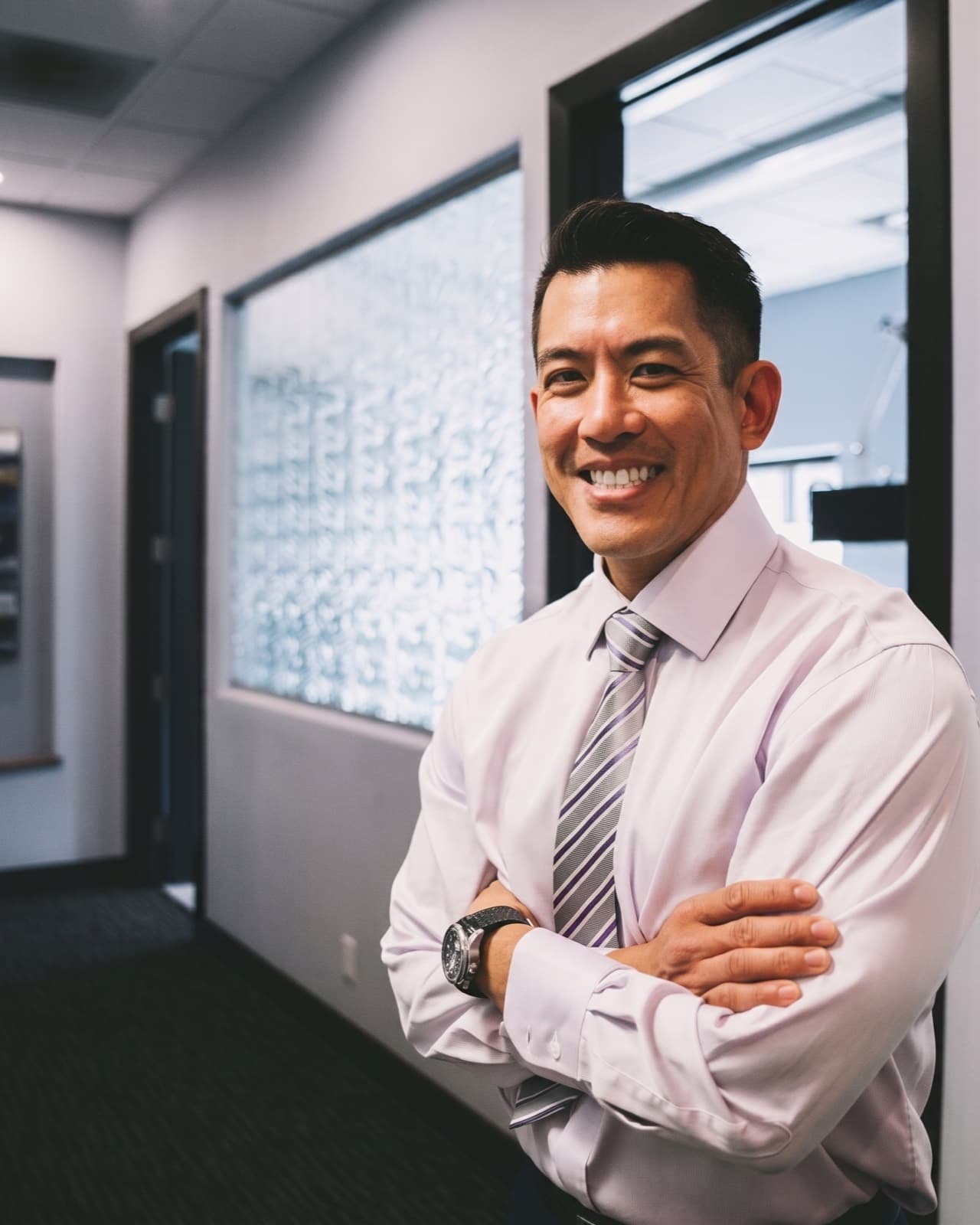
Dr. Goh plans your care himself.
- Dental degree, UCSFDoctor of Dental Surgery
- Certified Digital Smile Design providerSmile plans start from your face
- At least four more dentists review itEvery Digital Smile Design plan
- LVI Global graduateAdvanced cosmetic training
- Academy of Facial EstheticsFace and smile together
- Top Dentist, Las VegasDesert Companion
- iTero 3D scans
- CBCT 3D imaging
- 3D-printed smile previews
- Invisalign Outcome Simulator
The honest answers.
9 questionsMore questions (3)
Come in for the numbers, not the polish.
You leave with a reading for every tooth, what it means, and how often to come back. Written down, itemised, and no pressure to start the same day.
Usually open Tuesday to Thursday, plus some Mondays and Fridays, 8 AM to about 4:30 PM. No evening or weekend appointments. Hours shift every two weeks, so call to confirm.
Financing available: CareCredit · Cherry · VIP Savings Plan (in-house membership)
Book online or get in touch
Or leave your details below and we reach out the way you prefer.